 Values
Reference
Profiles
Exotics
Order
MENU
Values
Reference
Profiles
Exotics
Order
MENU

In the early 1980s a new innovation in transportation began to sweep America's traveling families off their feet: the mini-van. While the concept of these vehicles dated to the 1950s (VW Kombi, then the Corvair and Econoline window vans), the mini-van was different in that it was designed specifically to be a family car rather than a spin-off of a commercial vehicle. By the early 1990s, the mini-van craze was in full swing, while another American motoring icon--the station wagon--was quickly fading from the scene.
Developed in the earliest days of motoring, the station wagon originally found its roots in the commercial field, serving to haul passengers from the railroad station to their destination, hence the name. The first wagons were wood bodies on a sedan chassis, and these pre-war "woodies" have long been collectible in their own right. In just the past year, some of these models have seen prices increase by 30-40 percent. (update 2020: underscoring the pitfalls of investing in old cars, values for woodies have fallen markedly during the last several years)
While woody wagons found their niche in the passenger car market before the advent of World War II, it wasn't until after the war that station wagons became an American mainstay in the automotive industry, and in the family garage.
Wood worked, but it required constant attention to maintain its appearance, and no amount of care could maintain body integrity of these woodies. They loosened up pretty quickly, especially when driven repeatedly over rough and bumpy roads. Something better was needed.
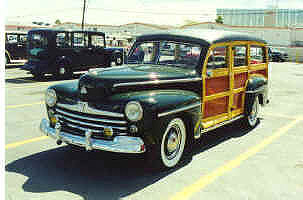 By the forties the all-wood body had given way to a mix of steel and wood as shown on this '48 Ford.
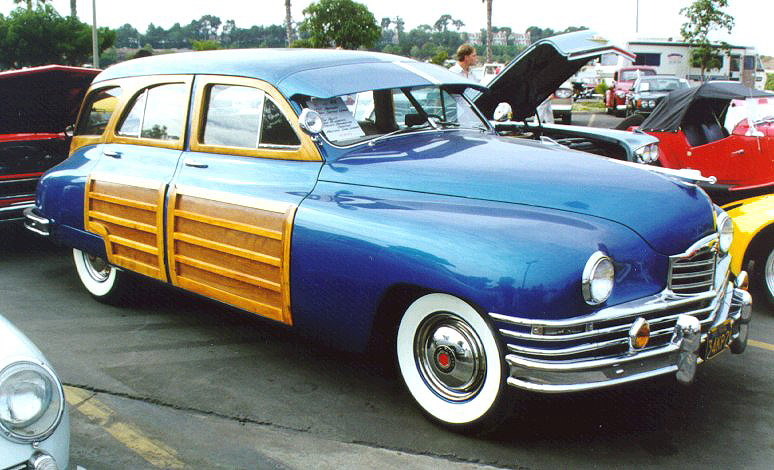 This '50 Packard was all steel with wood trim
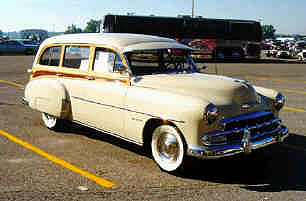 A 1952 Chevy with all steel construction and just of hint of the old woody style. Note this transition occured over just a few years.
In the late 1940s, steel-bodied station wagons began to find their way to the car market. One of the pioneers in this field was the compact car manufacturer Crosley. At one time this intrepid manufacturer was the world leader in station wagon production. In 1948 Willys introduced it’s own all-steel bodied Jeep station wagon equipped with either two-wheel or four-wheel drive.
In June 1948, Ford started to take its position as the "wagon-master" with it’s 1949 model. Utilizing a full steel body, these two-door wagons used wood trim as decoration. A few months earlier in 1948 Packard had brought out a four-door "station-sedan" also sporting a steel body with wood trim.
As the 1950's dawned, wood became strictly a decorative item, and disappeared in 1953. In the middle of that year both Ford and Mercury started to substitute real wood with fiberglass railings and Di-Noc wood print paneling. At one point these were the only station wagons on the market that even resembled their wooden heritage.
Throughout the 1950s, station wagon technology continued to improve as manufacturers sought to capitalize on their increasing popularity. During this period, the marketing crews created many memorable names to catch the public’s attention. Chevrolet brought us models with names such as Handyman, Nomad, Beauville, and later Brookwood, Kingswood, and the Corvair-based Lakewood.
Ford was the wagon master with the Ranch Wagon, Country Sedan and top-of-the-line Country Squire. Medium-priced makes, such as Desoto, also entered the station wagon market with the Shopper and up-scale Explorer, while Pontiac presented the sleek Safari wagon, a cousin to the Nomad.
Just as pillar-less hardtop styling was catching on for regular passenger cars, wagons soon reflected this unique feature. First to utilize it was Rambler's Cross-Country wagons. Mercury followed in 1957 with entries such as the Commuter, Voyager, and Colony Park. That same year, over at General Motors, mid-line station wagons with hardtop styling came in the form of Oldsmobile’s Fiesta, while Buick produced the stylish Caballero.
In 1960, Chrysler and Dodge were the last to introduce hardtop styling in a wagon. These cars were produced until 1964 and are perhaps the most flamboyant of all.
A number of unique features were developed to attract new wagon buyers. Chrysler wagons featured dual-air conditioning in the late 1950s. One unit was up front for the driver and front seat passenger, and another unit for those in the rear. Studebaker provided one of the most memorable items with its sixties Wagonaire sliding roof option that opened over the rear cargo space. GM recently revisted this idea with it's XUV Envoy.
The new compacts of the 1960s, Falcon, Valiant, Corvair and Lancer were all available in station wagon form. Later, intermediates, such as the mid-size Ford Fairlane and Chevrolet’s Chevelle were released with wagons in their lineups. Notable among this group is GM’s raised rear roof panel with tinted window inserts. It was available on some Buick and Olds models through 1972 and are sought after today.
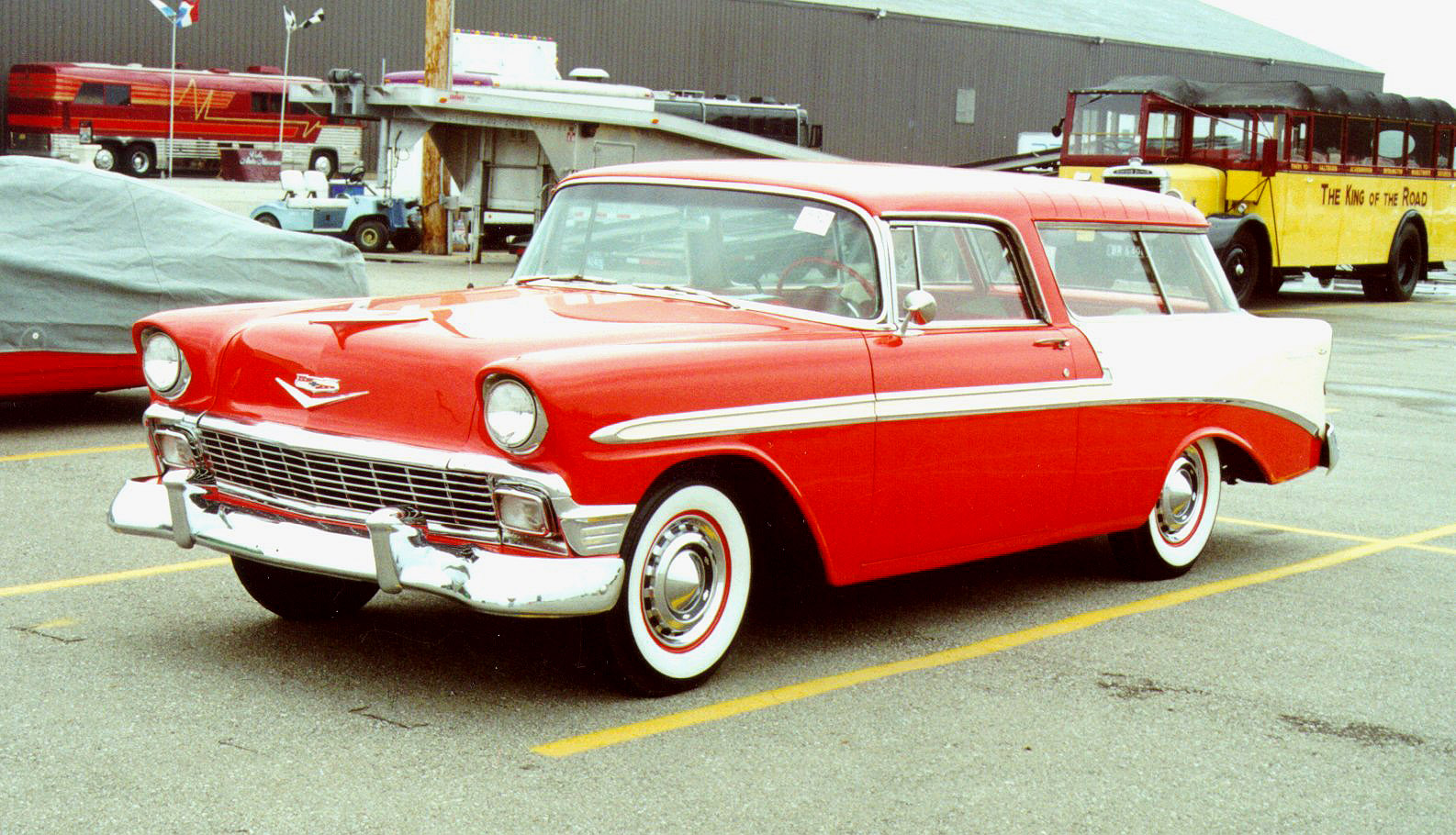 The '55-'57 Chevy Nomads were the first postwar wagons to become collectible. Indeed, along with the '55-'57 Thunderbird they were the first postwar cars to garner collectible status and helped launch the hobby as we know it today.
 Ford became the leader in the wagon segment and held on to it right to the end.
 Rare and sought after today, the Corvair wagon was flop due to it's limited cargo capacity and unconventional technology.
In the 1950s and 1960s station wagon makers like Dodge, Chevrolet and Ford, had several models with high-performance engines. For instance, during the 1963 model year, Mercury produced a dozen Colony Park wagons fitted with the big block V-8 and four-speed transmissions for the NHRA. Talk about a family hauler!
Over the years, one of the most important features of the wagon, the tailgate, also evolved. In the late 1950s the liftgate was replaced by roll-down rear glass going into the tailgate, another innovation first seen on AMC Rambler wagons. In 1966 Ford and Mercury revolutionized the market with its "two-way" tailgate design that could either fold down to load cargo, or operate as a passenger door. GM one-upped this in 1971 with the "clam-shell" tailgate on its full-size wagons, in which the back glass rolled up into the roof while the lower gate portion disappeared into the rear floor. Although stylish, it did sacrifice some usable cargo space and no one else felt compelled to copy it. It also developed more squeaks and rattles as the vehicle aged than a conventional tailgate.
Station wagons in the collector car market are just now being discovered. "Woody" wagons have long been honored, and the sporty 1955-1957 Chevrolet Nomads have been sought after for over twenty years. Now, other station wagon models are starting to catch collector's eyes. Other than the aforementioned woodies and Nomads, these are mostly at the beginning of the appreciation curve. Although most any wagon can be collectible, our favorites for ownership enjoyment and future value appreciation include:
- Ford Country Squires up to 1970
- Big, flashy 50s, 60s and even early 70s Chryslers, Mercurys, Buicks and Oldsmobiles. Especially the pillarless models
- Corvair Lakewood
- Studebaker Wagonaires
- Ramblers of the late 50s and early 60s
- Intermediate GM models with the Vista roof
- Special editions (or regional models) of a standard model that where produced in limited quantities
- Early 1970s AMC Hornets, particularly with the 360 V8
- Early 1970s Pinto Squires, Chevy Vegas (believe it or not!)
Unlike many convertibles and hardtops, once the family was done with the "old station wagon", they weren't relegated to the used car lots in the same manner. Dad may have kept the Vista-Cruiser for those weekend fishing trips, or a local one-man painting crew would take over ownership of the Country Sedan as his portable office.
 The Country Squire epitomizes the segment better than any other.
 The Buick Skylark and the Olds Cutlass offered a very cool roof option with skylights. They are sought out today.
 The unique Studebaker Wagonaire offered roof that retracted, expanding cargo capacity and utility.
Aside from typical body rust and damage problems which applies to all vintage tin, station wagons seem to possess a pretty good survival rate. One weak spot for many models from the 1950s is the fit of the lift and tailgates. The 1955 to 1957 Chevrolet Nomads, as well as their Pontiac Safari counterparts, are known for their less than weather-tight lift gates. Other wagons with lift gates experience shakes and rattles due to worn fittings and tired hinges. It takes dillegence and attention to detail to bring one back to its original performance.
Spare tire storage on many models was under the a rear cargo area panel, or in a special container in the quarter panels. These should be checked as potential rust pits. Standing water due to clogged drain holes is quite common here.
Woody wagons in need of restoration can be a tough job to tackle. However, thanks to several suppliers there are many replacement kits for just one panel or the whole body available. For those cars using the wood-transfer decals, several companies are starting to produce generic varieties. While this works for many models, those with unique grains or colors will require more research, money, or innovative restoration skills. Sometimes you’ll need all three! So make sure you know not only which engine and transmission combinations were available -- the proper colors and materials used in soft and exterior trim are important, too.
In recent months, a number of station wagons with a real collector interest have been showing up at vintage and classic car auctions. Their prices have seen a steady increase in both the asking side and the selling side. Still, station wagons haven’t been as common on the auction block or in the pages of hobby publications with anything near the frequency of their hardtop and convertible siblings.
Station wagons can be one of the best bargains in vintage Detroit iron. Those equipped with real wood trim are experiencing solid growth as the increasing popularity of these models drives the prices upward. Later wagons equipped with faux wood trim such as Ford Country Squire, Mercury Colony Park, or later Chevrolet Kingswood Estate wagons and experiencing double digit value appreciation, especially original "time-capsule" type examples. Discovering a wagon still with the original family can be a treasure, and many have been maintained with proper care their entire life. Nostalgic references are being constantly made to old station wagons, such as the Fox-TV sit-com, "That ‘70s Show", usually in the context of the stigma of driving a "mom’s" car.
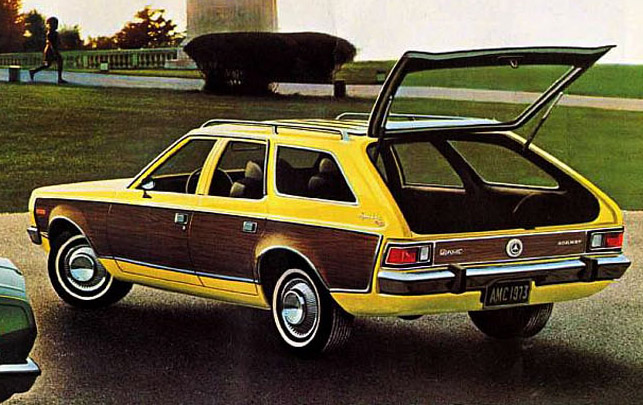 |
| This 1973 AMC Hornet wagon was just right for the oil embargo of the same year. |
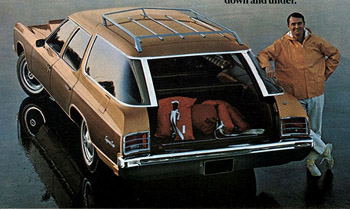 |
| GM's disappearing tailgate had a lot of wow factor, but ate up space and was prone to failure as it aged. Rust was a problem, too. It can be a tricky fix. |
Station wagons are a special segment of the hobby, and fans of these forgotten haulers are growing. They offer a wide variety of desirable characteristics. Just like their coupe and convertible siblings, many are big, powerful, and flashy with gobs of style. They're great for Home Depot runs, too. Just be prepared for a lot of comments in the parking lot! They also make a great vintage car for touring. Pack the family and all their gear, and you’ll discover the copious cargo and people carrying capacity of the classic wagon.
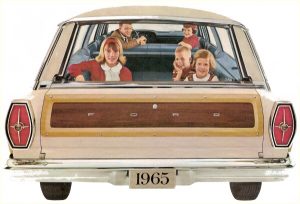 |
| A familiar sight during the wagon's heyday. |
(C) Copyright 1999- VMR International, Inc. All rights reserved. This article first appeared in the July 1999 issue of Collector Car & Truck Market Guide.
 |
 |
 |
 |
| |
 |

